4376 visitors
| Cakebread Cellars has vineyard properties located throughout Napa Valley and recently added a location in the Anderson Valley . The winery ranches surrounding the production facility in Rutherford are where it all began. The first 22 acre parcel was purchased in 1972. Over the years, the family has continued to acquire additional vineyard parcels throughout Napa Valley and the North Coast. Today, the winery owns 13 sites totaling 420 acres, 340 of which are currently planted. This judicious acquisition and development of vineyard land enables us to more completely control the quality of the fruit we grow and the wines we make. | Rutherford, CA
Phone: 800-588-0298
Website: http://www.cakebread.com
Appellation: Napa Valley
|
|
Sauvignon Blanc
|
2007 Sauvignon Blanc
Napa Valley
We sourced the grapes for our 2007 Napa Valley Sauvignon Blanc primarily from our estate vineyards in Rutherford, our newer vineyards Calistoga and Carneros regions as well as seve ... moreral outstanding vineyards in St. Helena. The superb fruit from these sites allows us to produce a crisp, full-bodied, complex Sauvignon Blanc of distinctive varietal character. In 2007, we further enhanced the wine’s complexity by blending in 4% Sauvignon Musqué, an especially aromatic clone of Sauvignon Blanc, and 7% Sémillon, which enriched the mid-palate, softened acidity and contributed a pleasing citrus tone.
We night-harvest our Sauvignon Blanc grapes at cool temperatures to preserve their fresh, vibrant flavors and achieve an ideal balance of sugar and acidity. After the grapes arrive at the winery, we immediately press the whole clusters to maximize varietal character while minimizing the extraction of astringent compounds from the skins. In 2007, 59% of the juice was tank-fermented and aged in neutral French oak barrels; 26% was fermented and aged in barrel; and 15% was tank-fermented with no oak aging.
| |
|
Chardonnay
|
2007 Chardonnay
Napa Valley
We source the grapes for our Napa Valley Chardonnay primarily from the cooler southern precincts of the valley, which stretch from the fog-chilled Carneros district to relatively w ... morearmer sites just north of the town of Napa. Blending fruit from diverse microclimates and soils allows us to craft a rich, ripe, elegantly structured Chardonnay that’s delicious on release, but also ages well in bottle. To enhance the wine’s freshness and protect our vineyard workers from the high temperatures prevalent during harvest, we pick most of our fruit at night, ensuring it arrives at the winery in pristine condition.
We whole-cluster-pressed the grapes for optimum freshness, then fermented 85% of the juice in French oak barrels, with the balance fermenting in stainless steel tanks to preserve the wine’s bright fruit character. Our 2007 Chardonnay aged sur lie (on the yeast lees) in French barrels, 35% new, for eight months, with periodic stirring of the lees to enrich texture and flavor. In 2007, 11% of the Chardonnay barrel lots were selected to undergo a secondary malolactic fermentation which softens the natural acidity resulting in a fuller bodied wine. Winemaker Julianne Laks tastes
| |
|
Chardonnay
|
2006 Chardonnay Reserve
Carneros Napa Valley
We night-harvested 100% of our Carneros Chardonnay grapes and whole-cluster-pressed the fruit to obtain the freshest, purest juice possible. After cold-settling the must in tank f ... moreor 36 hours, 75% of the juice was inoculated with cultured yeast strains that enhance the rich fruit character of Chardonnay, while 25% fermented with native yeast strains fostering greater complexity and a pleasing minerality. All the juice fermented in French oak barrels, 35% new, with 14% undergoing a secondary, malolactic fermentation to engender a silky, creamy texture. Aging the wine in barrel on its primary yeast lees for 15 months, with plentiful stirring and no racking, further magnified its textural and flavor richness. After racking off the lees, the wine was bottled in January, 2008
| |
|
Pinot Noir
|
2006 Pinot Noir, Anderson Valley
Anderson Valley, Mendocino Co
We fermented each of our six Anderson Valley Pinot Noir clones separately to optimize their distinctive personalities, with 15% fermenting with native yeasts from the vineyard. Pr ... moreior to fermentation, each lot received a three-day cold soak to gently extract color and tannin while accentuating Pinot Noir’s fruit-forward character. In traditional Burgundian fashion, the juice fermented in open-top tanks with gentle, manual punch-down of the cap. After fermentation completed, the wines macerated on the skins for another two weeks, with daily assessments of color and tannin development. We then gently drain the free run wine from the skins and age it in French oak barrels. The 2006 Anderson Valley Pinot Noir aged 15 months in French oak, 45% new, before being bottled in December, 2007
| |
|
Other Red
|
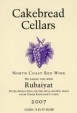
2007 Rubaiyat
North Coast
Rubáiyat is a blend of numerous small lots of grapes harvested at different times from multiple vineyard sites. The blend changes every year, providing winemaker Julianne Laks wi ... moreth the opportunity to be creative. In general, Julianne selects lighter-bodied, fruitier lots for Rubáiyat. These are kept separate and fermented primarily in small, open-top tanks with manual punchdowns of the cap, a method that gently macerates the juice and skins to extract optimal color and flavor. The lots for our 2007 Rubáiyat aged 15 months in French oak barrels, 38% new, before blending.
| |
|
Merlot
|
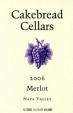
2006 Merlot
Napa Valley
After the grapes arrive at the winery, we de-stem and crush them, then cold-soak the must (unfermented juice and skins) for 24-36 hours to extract color and flavor prior to ferment ... moreation. Once fermentation commences, we used a Bordeaux technique called rack-and-return, in which fermenting juice is drained from one tank and transferred to another, leaving the ‘cap’ of grape skins in the first tank to fall to the bottom. We then return the fermenting wine to the original tank, re-macerating the skins and maximizing color and flavor extraction while softening tannins through controlled aeration. Once fermentation completes, we age the wine in French oak barrels – a total of 18 months in 2006 – which further softens this delicious, fruit-driven wine
| |
|
Cabernet Sauvignon
|
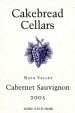
2005 Cabernet Sauvignon
Napa Valley
After crushing and cold-soaking the fruit for 24-36 hours to enhance extraction, the juice from each vineyard lot was fermented separately in temperature-controlled stainless steel ... more tanks, at warm temperatures, to fully extract color and flavor. Fermentation completed in approximately seven days, but the wines macerated on the skins for an additional three weeks to maximize color and flavor extraction and enhance tannins. The free run juice from each lot was then drained and transferred to French oak barrels, 57% new, for aging. During this period, we frequently taste each lot to monitor its aroma and flavor development, texture, and oak character. In spring, 2006, the lots chosen for our Napa Valley bottling were blended, and subsequently aged an additional 14 months in barrel before bottling in July, 2006.
| |
|
Cabernet Sauvignon
|
2005 Vine Hill Cabernet Sauvignon
Oakville Napa Valley
Cakebread Cellars’ winemaker Julianne Laks utilizes traditional artisan winemaking techniques with our Vine Hill Ranch fruit to ensure maximum extraction of color, flavor and tan ... morenin. After crushing the grapes, the juice is cold-soaked for 48 hours before fermentation is initiated with a cultured French yeast strain that enhances mid-palate texture, depth and intensity. After fermentation completes, the wine enjoys an extended, 20-day maceration on the skins to further extract color and flavor while softening tannins. We then gently drain the free run wine from the skins and age it in French oak barrels. The 2005 Vine Hill Ranch aged 22 months in French oak, 35% new, before bottling in July, 2007.
| |
|
Cabernet Sauvignon
|
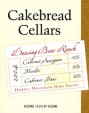
2004 Dancing Bear Ranch
Howell Mountain Napa Valley
Our Howell Mountain grapes possess deeper color, higher acidity and more tannin than our valley-grown fruit. As a result, our winemaking approach with Dancing Bear is to capture th ... moree distinctive, intense character of the fruit without extracting overly aggressive tannins. To do so, we carefully monitor fermentation temperatures and the ‘cap’ of skins at the top of the fermenting tank, whose contact with the juice determines the degree of tannin extraction. Winemaker Julianne Laks carefully manages these processes during fermentation and maceration (the period after fermentation when the wine remains in contact with the grape skins), tasting the wine daily to assess tannin levels and ‘mouth-feel’. When Julianne senses the wine has achieved an optimal balance of fruit intensity and ripe tannins, we drain the free run wine from the skins (no ‘press wine’ is used) and transfer it to French oak barrels for aging. The 2004 Dancing Bear was aged 22 months in French oak barrels, 45% new, prior to bottling in August, 2006.
| |
|
Cabernet Sauvignon
|
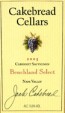
2005 Benchland Select Cabernet Sauvignon
Napa Valley
Our 2005 Benchland Select Cabernet Sauvignon was produced from three prime vineyard sites located along the gently sloping western benchlands of Napa Valley’s Oakville appellatio ... moren. These sites enjoy ideal eastern exposures, mild afternoon temperatures and well-drained soils, ensuring their fruit ripens slowly and evenly throughout the growing season. We hand-harvest, ferment and age each block separately to capture its unique qualities, then blend the lots to create a Napa Valley Cabernet Sauvignon of exceptional fragrance, depth and character.
To craft our Benchland Select Cabernet Sauvignon, Cakebread Cellars winemaker Julianne Laks ferments the fruit from each vineyard site separately, employing the tank sizes, yeast strains, fermentation temperatures and maceration techniques best suited to each lot, which vary not only by location and ripeness level, but also by clonal type. These specialized fermentations and the lot-specific barrel aging regimens Julianne employs ensure that the finest attributes of each vineyard site are reflected in the final blend. The 2005 Benchland Select aged a total of 21 months in French oak barrels, 38% new, before bottling in July, 200
| |
|
Cabernet Sauvignon
|
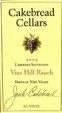
2004 Vine HIll Ranch Cabernet Sauvignon
Oakville, Napa Valley
Our single-vineyard Vine Hill Ranch Cabernet Sauvignon is produced from several special blocks of grapes grown in the acclaimed Vine Hill Ranch along Oakville’s gently sloping we ... morestern benchlands. We have been purchasing these grapes from Vine Hill Ranch owner Bob Phillips since 1981, and they consistently yield exceptionally intense, concentrated and complex Cabernet Sauvignons that annually rank among Napa Valley’s finest.
We utilize traditional artisan winemaking techniques with the Vine Hill Ranch fruit to ensure the maximum extraction of color, flavor and tannin. After crushing the grapes, the juice is cold-soaked for 48 hours before fermentation is initiated with a cultured yeast strain. In 2004, we used a single French strain that enhances mid-palate texture, depth and intensity. After fermentation completed, and the wine enjoyed an extended maceration on the skins to further extract color and flavor while softening tannins, we gently drained the free run wine from the skins and aged it in French oak barrels for 22 months, 63% new, before bottling in August 2006.
| |
Updated on February 1, 2019
CrazyAboutWine recommends contacting Cakebread Cellars at http://www.cakebread.com or calling 800-588-0298 to verify the winery's location.
|
|